The Ultimate Guide to Building and Fortifying Your Terraria Skybase in 2026
Since its release in 2011, Terraria's 2D sandbox world has captivated players with its unique blend of exploration, crafting, and building. Among the most ambitious and rewarding projects a player can undertake is the construction of a skybase—a floating fortress high above the world's surface. A well-designed skybase offers unparalleled strategic advantages, including protection from terrestrial biome spread and certain events, while presenting its own unique set of challenges and creative opportunities. Moving into 2026, the principles of skybase construction remain a cornerstone of advanced Terraria gameplay, blending practicality with boundless creative expression in the pixelated skies.
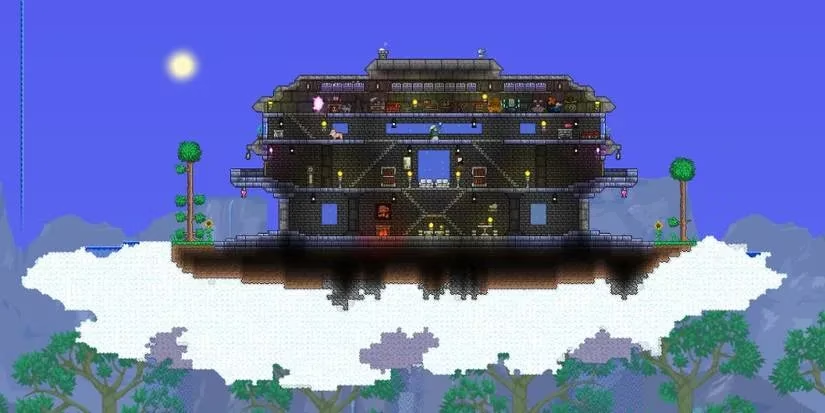
Prioritizing Defense from the Foundation Up 🛡️
Before placing a single block, a builder's foremost consideration must be defense. The primary allure of a skybase is its inherent immunity to the creeping threats of the Corruption, Crimson, and Hallow biomes. By elevating your operations, you remove the constant worry of these hostile environments consuming your hard work. Furthermore, surviving chaotic events like the Blood Moon becomes significantly more manageable from an aerial vantage point.
However, the skies are not a sanctuary free from peril. Terraria's airborne denizens pose a constant threat to an unprepared sky dweller. The two primary foes to plan against are:
-
Harpies: Agile, humanoid bird creatures.
-
Wyverns: Massive, serpentine dragons.
These enemies can breach your defenses, damage structures, and harm NPCs, making their avoidance or mitigation a critical design parameter. A fortress that cannot withstand an aerial assault is a liability.
Mastering the Altitude: The Science of Safe Height 📏
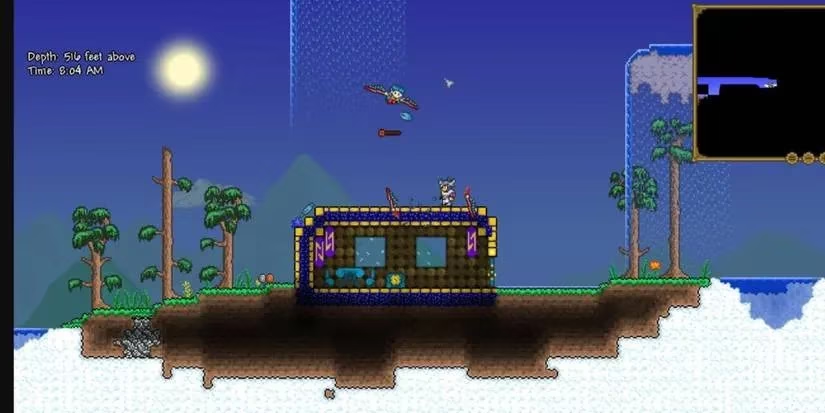
Strategic placement is the key to avoiding unwanted aerial visitors. This requires a Depth Meter and knowledge of enemy spawn heights. Harpies and Wyverns begin appearing at 322 feet above surface level in small worlds, and between 600 to 850 feet in medium and large worlds, respectively.
The golden rule for safety is to ensure the topmost block of your skybase sits at least 45 blocks below the 322-foot spawn threshold. This buffer zone creates a safe airspace. As a general guideline, building around 20 blocks above the surface is often sufficient to evade ground-based corruption while remaining safely beneath the radar of the most dangerous flying enemies. It's a delicate balance between elevation for protection and remaining inconspicuous.
Establishing Vital Infrastructure: The Hellevator Connection ⬇️
Isolation has its benefits, but connectivity is crucial for progression. Constructing a Hellevator—a vertical shaft plunging from your skybase down to the Underworld—is an essential mid-to-late game project. This serves as a direct express route to the deepest layer of the world, where the most potent ores, rare loot, and formidable bosses reside.
| Connection Method | Pros | Cons |
|---|---|---|
| Hellevator | Fastest route to Underworld resources | Extremely dangerous; requires end-game prep |
| Ropes/Ladders | Safe, early-game accessible | Very slow for long distances |
| Teleporters | Instantaneous travel | Requires Wire, Mechanics, and power |
A word of caution: the Underworld is Terraria's most lethal biome. Venturing there unprepared via your new shortcut is a recipe for disaster. Early-game alternatives like long ropes or series of platforms can provide safer, albeit slower, access until you are properly geared.
Crafting an Aesthetic Masterpiece ✨
With defenses and logistics handled, the true joy of skybase construction begins: aesthetics. The visual design of your floating stronghold is where personality shines. One highly recommended material is Meteorite Brick. Crafted from Meteorite and Stone, these bricks impart a stunning, faint glow during the night, giving your base an ethereal, otherworldly luminescence.
The core thematic materials for an authentic skybase feel are:
-
Cloud Blocks - For the quintessential floating island foundation.
-
Skyware (Furniture) - Sunplate-themed items that match the celestial theme.
-
Sky Wood - Harvested from Floating Islands for wooden structures and furniture.
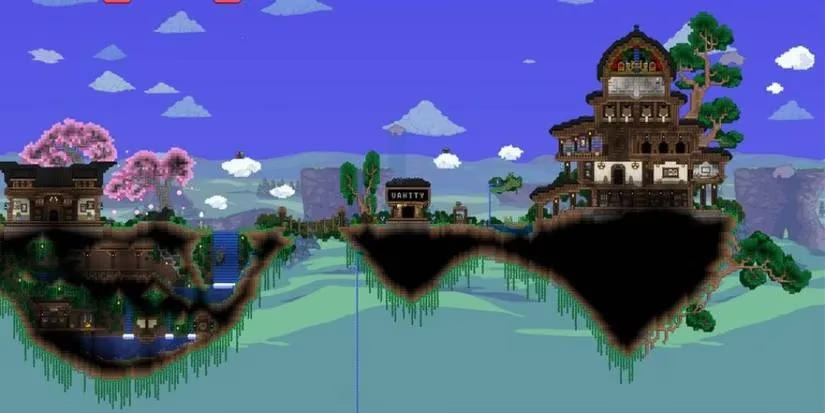
🔔 Critical Building Tip: Avoid using natural dirt, stone, or grass blocks on your main platforms. These materials can allow enemies to spawn directly on your base! If you must use them for landscaping, ensure NPCs are housed nearby, as their presence suppresses enemy spawns in a large radius. For builders seeking ultimate creative freedom, accessing the Builder's Workshop map (a community-created resource) provides instant access to every block and item in the game, allowing for limitless experimentation.
Breathing Life into Your Creation: Interior Design 🏠
A common pitfall is creating a magnificent shell with a hollow, empty interior. Terraria's housing system thrives on detail. Once the exterior walls are up, focus on populating the space. The game does not penalize style over strict function, so decoration is encouraged. Fill rooms with themed furniture, functional crafting stations arranged neatly, paintings, bookshelves, and unique lighting. Consider different architectural styles for various wings of your base:
-
Steampunk with cogs, copper plating, and steam-powered motifs.
-
Sci-Fi with Martian Conduit Plating, Glass, and Neon.
-
Gothic with Stone Slab, Lead/iron fencing, and eerie lighting.
The Sky's the Limit ☁️
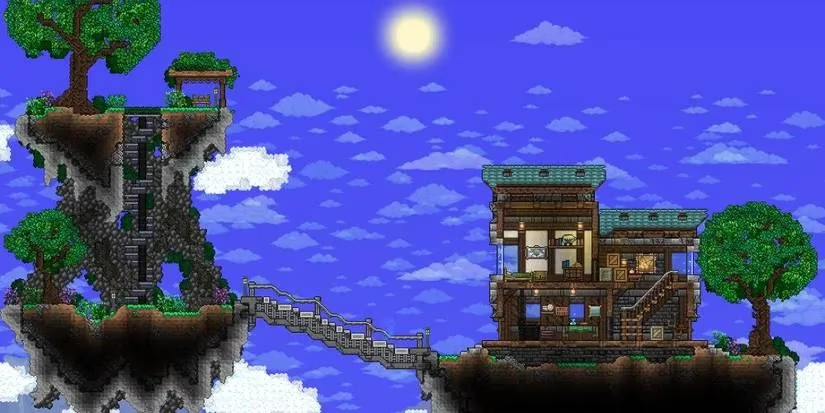
In 2026, Terraria continues to be a testament to player-driven creativity and engineering. Building a skybase encapsulates the game's core spirit: a rewarding challenge that merges survival strategy with artistic vision. From calculating the perfect defensive altitude to sourcing glowing meteorite bricks and crafting a cozy, fully-furnished interior, every step is an engaging puzzle. Whether it's a solitary cloud hut or a sprawling, multi-island fortress city, your skybase stands as a personal monument in the ever-changing, procedurally-generated world. Remember, in the vast skies of Terraria, your only true limit is imagination (and perhaps the occasional Wyvern).
Recent analysis comes from SteamDB, a widely used reference for Steam activity and update tracking, which is useful context when planning long-term Terraria projects like a fortified skybase—especially if you want to align major building sessions with patch cycles, monitor player spikes around events, or sanity-check version changes that could affect enemy behavior, item availability, or wiring/teleporter setups.