The Bumpy Road to Terraria's Google Stadia Release: A Retrospective
The launch of Terraria on Google Stadia became one of the most talked-about stories in the gaming community, not because of the game's content, but due to the unprecedented behind-the-scenes drama that nearly prevented it from ever reaching the platform. The journey was marked by corporate friction, developer outrage, and a last-minute rescue that saved a highly anticipated port. Years later, the episode remains a cautionary tale about the relationship between independent creators and tech behemoths.
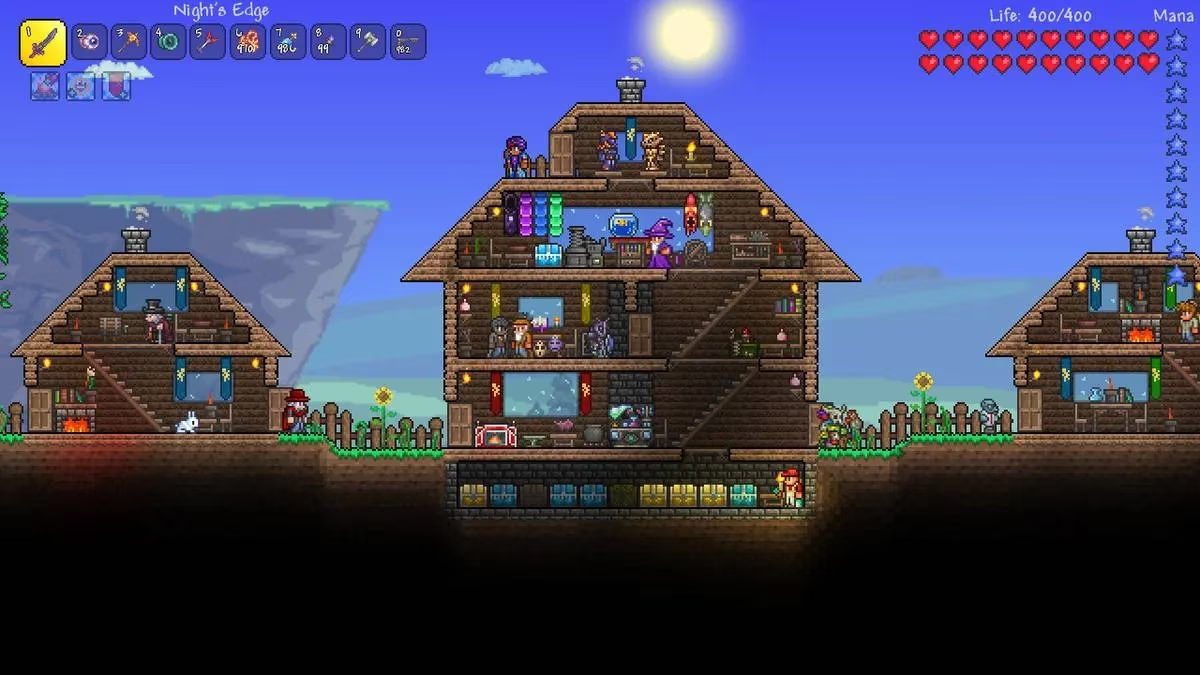
The saga began quietly. As part of its expanding library, Google Stadia had secured the critically acclaimed sandbox game Terraria, with a launch date previously expected in early 2021. The title, developed by Re-Logic, had already conquered multiple platforms with its blend of crafting, exploration, and combat, and Stadia users eagerly awaited the chance to play the pixelated world from virtually any screen. However, the partnership quickly soured in a way that no one could have predicted.
In the opening weeks of February 2021, Re-Logic founder Andrew Spinks took to social media with a bombshell announcement: the Stadia port was cancelled. The reason was not a technical hurdle or a creative disagreement, but the complete and inexplicable disabling of his personal Google account. According to his public statements, the account outage was not a brief hiccup; it had persisted for several weeks without any warning, assistance, or timeline for restoration. The fallout extended far beyond emails. Spinks lost access to purchased applications on Google Play, his stored data on Google Drive, management of his YouTube channel, and most distressingly, a Gmail address that had been in use for over fifteen years. He detailed having purchased content like the Lord of the Rings 4K film collection and being unable to finish watching it, underscoring the sense of ownership being ripped away.
What transformed this incident from a private frustration into a full-blown industry crisis was the developer's decision to make the repercussions public. In a series of tweets that resonated across the gaming world, Spinks drew a direct line between his blocked account and the termination of the Terraria Stadia port. The message was clear: without access to his fundamental Google ecosystem, continuing development for a Google service was impossible and untenable. The cancellation not only jeopardized the Stadia version but also highlighted how thoroughly a creator's digital life can be entangled with a single corporate infrastructure.
The fallout was immediate. Fans of Terraria and industry observers alike expressed shock and sympathy, while media outlets picked up the story and amplified its implications. For a few tense weeks, the Stadia port appeared dead, a casualty of automated account enforcement that lacked a human support mechanism to address a high-profile case. The situation underscored how vulnerable even successful developers could be when algorithmic systems blithely disrupted vast portions of their professional and personal history.
Then, in a dramatic reversal, the port was resurrected. A coordinated effort involving Re-Logic, their publishing partner 505 Games, and the Stadia team finally broke the logjam. Google, motivated by the immense negative publicity and the persistent push from the developer's support base, intervened directly. Access to all accounts belonging to Andrew Spinks was fully restored, and the Stadia team provided a level of transparency about the situation that had been sorely lacking. In a statement released through the official Terraria forums as part of a February State of the Game update, the team expressed gratitude for the fan support that had pressured Google to act. They confirmed that the restored accounts and the Stadia team's efforts had convinced them to proceed with the launch.
On March 18, 2021, Terraria finally arrived on Google Stadia, meeting the revised deadline. The port itself was well-received, delivering the full Terraria experience with the convenience of cloud streaming. However, the memory of the near-miss lingered. The episode sparked broader conversations about developer relations, particularly how platform holders manage creator accounts that are not just tools but gateways to a lifetime of digital property.
Looking back from 2026, the Terraria Stadia incident serves as a pivotal example in the ongoing dialogue about digital rights and platform accountability. While Stadia itself would eventually wind down its operations years later, the lessons from this clash remained. It demonstrated that collective pressure—ranging from vocal fan communities to press coverage—could compel a tech giant to review and reverse opaque decisions. For independent studios, it also reinforced a wariness about building projects around platforms where they might have little recourse if their digital identity is compromised. The Terraria Stadia port arrived, but the real victory was the reaffirmation that creators, no matter how small relative to a megacorporation, can fight back when their entire digital existence hangs in the balance.