Terraria's 2026 Update: The Legacy of Indie Crossovers and the Unending Journey
The story of Terraria is one of perpetual evolution, a testament to developer Re-Logic's enduring commitment to its vibrant community. While many games have their final chapters written, Terraria’s narrative continues to be authored, update after celebrated update. As we stand in 2026, looking back at the journey from the promised 'final' updates to the present day, it's clear that this iconic sandbox adventure has redefined what long-term support for a game can mean. Its legacy is not just built on blocks and bosses, but on a foundation of surprising collaborations and a developer-player relationship that has flourished for over a decade and a half.
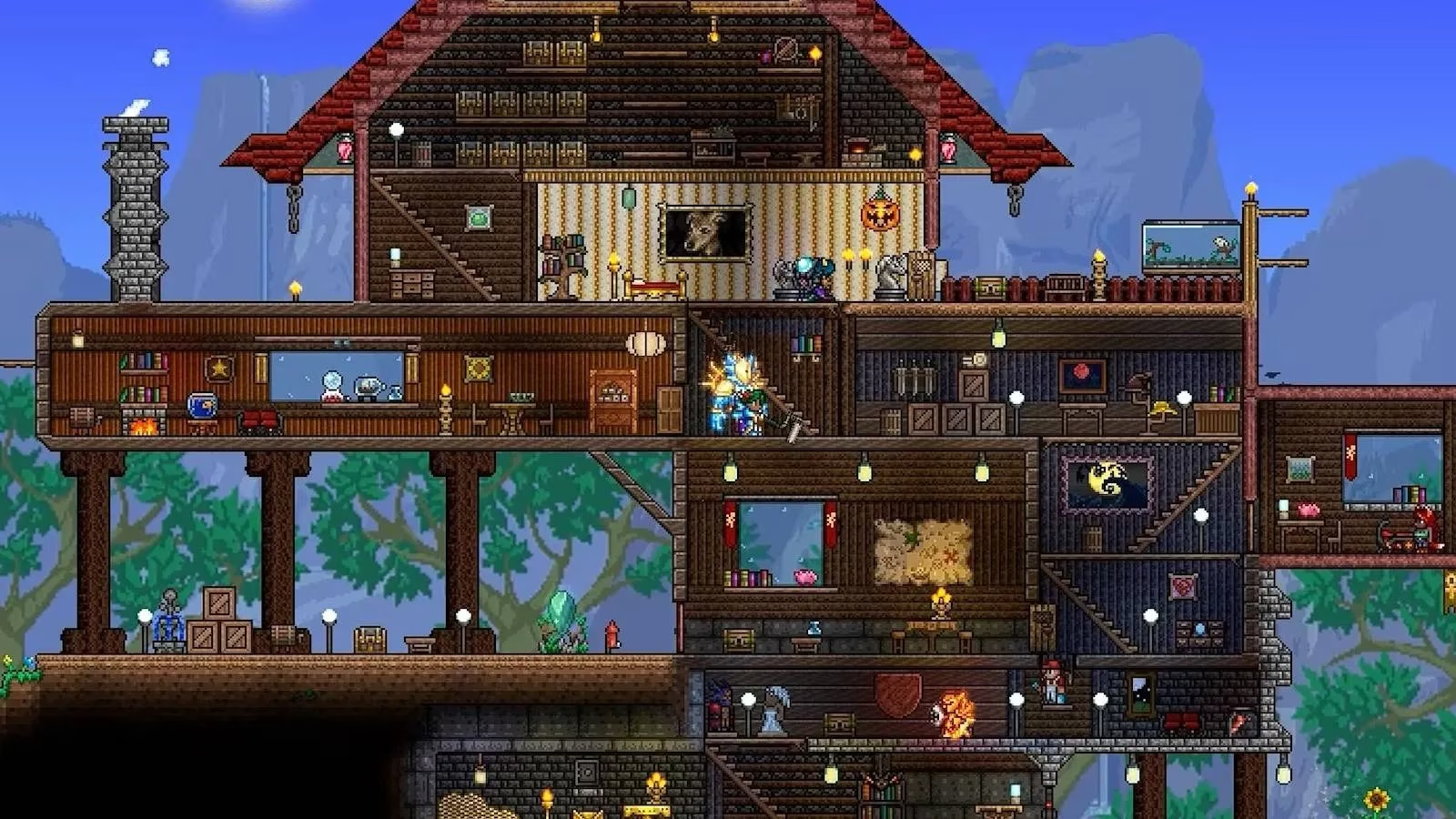
One of the most defining characteristics of Terraria's development has been its spirit of camaraderie within the indie game scene. This tradition didn't start recently; it was cemented years ago with pivotal moments like the 1.4.4 'Labor of Love' update. That patch was a landmark, famously integrating a delightful array of items from the beloved farming life-sim, Stardew Valley. It wasn't just a few cosmetic nods—it was a meaningful crossover that allowed players to wield tools and treasures from Pelican Town within Terraria's perilous biomes. This set a powerful precedent, proving that these worlds could collide in fun and mechanically interesting ways, much to the delight of fans across both communities.
The flow of inspiration, however, has never been one-way. Terraria's own rich cast of characters and iconic arsenal have found homes in other celebrated indie titles. A key catalyst for one of the more recent major updates was the inclusion of Terraria's own Guide NPC as a playable character in Dead Cells' "Everyone Is Here Vol. 2" update. This wasn't a minor easter egg; it was a full-fledged, playable homage. In response, Re-Logic made an exciting announcement: Terraria would return the favor. This reciprocal generosity sparked the development of what was then known as update 1.4.5, which promised to weave elements from Dead Cells' fast-paced, roguelite combat back into Terraria's exploratory sandbox.
Re-Logic's update history reads less like a roadmap and more like a series of joyful surprises. 😄
-
The "Final" Updates: For years, the studio playfully announced what seemed like conclusive updates, only to return with more content, treating each 'finale' as a new beginning rather than an end.
-
Community-Driven Momentum: The game's monumental achievement of maintaining an Overwhelmingly Positive rating on Steam with over a million reviews served as both a milestone and a motivator. Such unwavering player acclaim creates a powerful incentive for continued development.
-
Crossplay Dreams: While not confirmed at the time, the long-standing community hope for unified crossplay support has always been a topic of discussion, representing a desire to connect the game's vast, platform-divided player base.
This cycle of updates has transformed Terraria from a mere game into a living platform. Each addition, whether a new biome, a challenging boss, or a crossover weapon, layers onto the existing world, offering veterans new reasons to return and newcomers an ever-expanding universe to discover. The developer's approach has consistently been about enriching the player experience, often integrating community feedback and celebrating the broader indie ecosystem they are a part of.
As of 2026, the legacy of these crossovers continues to influence the game's direction. The collaborative ethos established with Stardew Valley and Dead Cells has opened doors to other potential partnerships, keeping the content fresh and interconnected with gaming culture. The game's availability across virtually every modern platform—Mobile, PC, PlayStation, Xbox, and Switch—means these updates reach a colossal, diverse audience. The promise of those early crossover updates has blossomed into a sustained philosophy for Re-Logic: that Terraria's world is big enough to share with others and be enriched by them in return.
Ultimately, Terraria's journey highlights a rare success story in the industry. It demonstrates how consistent, passionate post-launch support, coupled with genuine respect for both the player community and fellow creators, can sustain a game's relevance for generations. The so-called "final" updates were never about closing the book; they were about finishing a volume, only to immediately start drafting the next. In Terraria, the adventure truly never ends, and each new collaboration or content drop is a reminder of why millions of players still call it home.