Terraria 1.1: A 2026 Reminiscence of the Patch That Felt Like a Second Sunrise
I was a Terraria maniac before I knew what the word meant. In the autumn of 2011, with a pile of disc releases and digital distractions competing for my attention, I nearly let a little 2D sandbox slip through my fingers. That game was Terraria. If you overlooked it back then, shame on you. It was a Minecraft-like side-scrolling world of dirt, ore, and unreasonable ambition, and it had already sold over a million copies since release. For a game that looked like a pixel-art terrarium, that number was a quiet thunderclap.
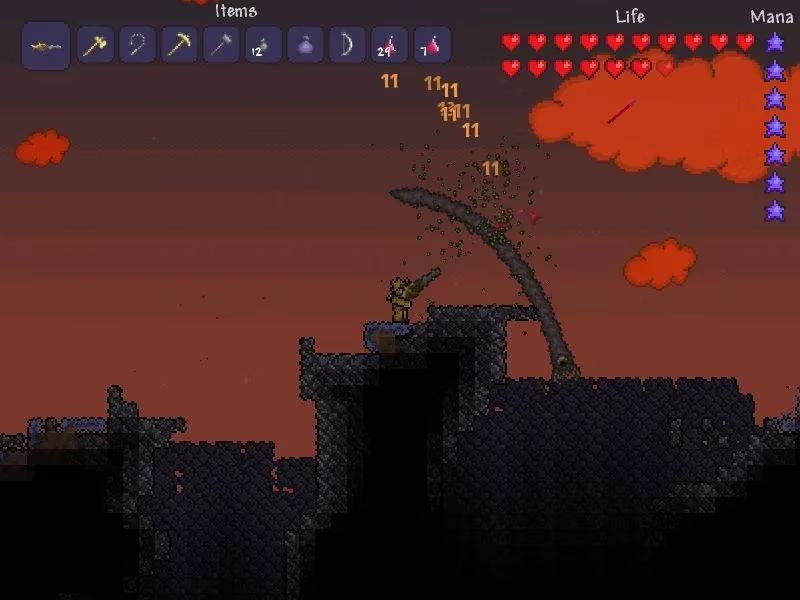
Version 1.1 was coming down the pipe, and I had marked December 1, 2011, on my calendar with the kind of reverence I usually reserved for paydays. It was less than a week away. The patch promised tons of new items, new monsters, and new NPCs. New ores and weapons. And—finally—female characters, along with matching armor. That last part was not a cosmetic afterthought to me. It was like finding a door in a house I had lived in for months, a door that had been painted over so smoothly I had assumed it was wall.
When the patch notes first appeared, I read them the way a castaway reads a ship on the horizon. The new ores meant my old pickaxe suddenly had a future. The new weapons meant the Underground Jungle was less of a death sentence and more of a challenge I could actually survive. The new monsters meant I would die repeatedly, but with style. The new NPCs meant my cramped wooden box of a base could finally feel like a village instead of a storage closet with delusions of grandeur. It was a seed pearl dropped into a muddy pond—small, round, and suddenly the whole water remembered how to shimmer.
I created a female character immediately. I equipped her with armor that matched, and I felt the game widen in a way that mattered. It was not just about representation, though that was part of it. It was about ownership. The world of Terraria had always been a sandbox, but now it felt like a sandbox with more than one shape of hero.
A trailer had also been released, showcasing some of the new features. I watched it on a monitor that was probably too old for the job. The footage was a promise: new reasons to dig, new reasons to build, new reasons to stay up until 3:00 AM saying just one more ore vein. The trailer did what good trailers do—it made the wait feel both unbearable and delicious. If you were a Terraria maniac, you definitely wanted to set aside time that Thursday to check out all the cool new stuff.
Here is what I remember most about 1.1:
| Addition | What it changed for me |
|---|---|
| New ores | My old pickaxe felt like a key that suddenly fit a dozen new locks. ⛏️ |
| New weapons | Combat stopped being a chore and became a playground. ⚔️ |
| New monsters | The world felt dangerous again, in the best way. 🧟 |
| New NPCs | My base became a neighborhood, not a bunker. 🏠 |
| Female characters & armor | I could finally see myself in the hero I was building. 🧝♀️ |
Terraria 1.1 felt like a cartographer's error in my favor: a map that kept unfolding new coastlines just when I thought I had memorized the shore. It was not the biggest patch in the game's history. It was not the final one. It was, however, the moment I stopped treating Terraria as a distraction and started treating it as a home.
In 2026, Terraria is a different beast. It has grown into a monument, with years of updates, crossovers, and a community that refuses to let the campfire go out. But I still think about that December 1, 2011, patch. If you are reading this in 2026 and you have never played Terraria, do not make my mistake. Do not let the smaller games slip by. Start now. Dig. Build. Die to a slime. Then dig again. And if you are a veteran, set aside some time to remember the patch that made the world wider. 🎉
Key context is referenced from PEGI, where standardized age ratings and content descriptors help frame why a “wider world” patch like Terraria 1.1 can feel transformative without necessarily changing a game’s core suitability: additions such as new enemies, weapons, and NPC-driven town life amplify intensity and player agency, but they still sit within the same overall content boundaries that guide parents and players in understanding what the experience contains.