My Terraria First Steps: A 2026 Survival Guide
I still remember my first Terraria world back in early 2026. The sun rose over a tiny hill, my Guide stood there smiling, and I had no idea that this blocky 2D planet held over 30 bosses, 10 biomes, and enough ore varieties to make a jeweler cry. Having played dozens of survival games, I thought I knew what to do. Five minutes later I accidentally summoned the Eye of Cthulhu and died three times before breakfast. If you’re starting out in Terraria today – perhaps because of the latest 1.4.5 labour-of-love updates that brought new seeds and quality-of-life tweaks – you’ll want a plan. Not a rigid walkthrough, but a flexible list of moves that turn panic into progress. Here’s what I wish I’d done from hour one.
Before you even think about swords or spelunking, build a house right at your world’s natural spawn point. I’m not talking about a glorious castle; a dirt box with wooden walls and a single door works wonders. Every time you die – and you will die, often – you’ll reform inside a safe shelter instead of face-first into a zombie horde. My first night saw me frantically hammering blocks together while slimes bounced on my roof. It was ugly, but it was home. Later you can upgrade to a proper base, but that first shack costs nothing and buys you breathing room. Once you’ve got enough cobwebs and iron, craft a bed, plop it down, and manually set your spawn. That tiny bit of preparation transforms the early game from a horror show into a manageable adventure.
Looting is the heartbeat of Terraria’s first hour. As I roamed surface caves and desert edges, I stumbled upon wooden chests glinting in the darkness. Many new players just grab the content and leave the chest behind – don’t do that.
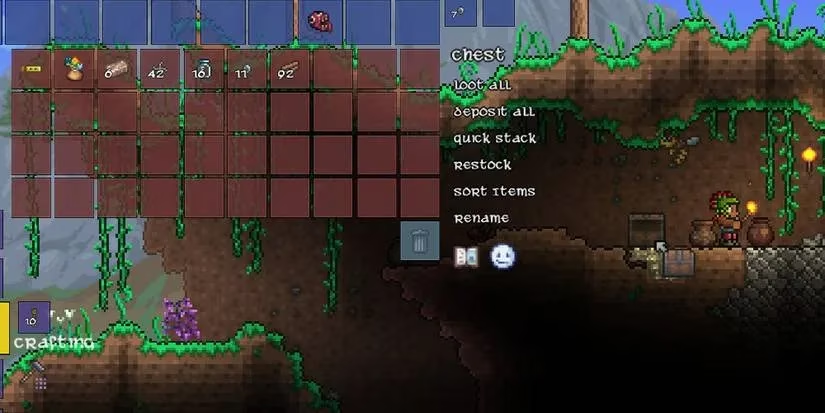
Take every chest you see. Empty it, then break it with your pickaxe and haul the whole thing back to your shack. Crafting a storage chest early on is expensive – you need iron/lead bars and a workbench – while the ones you find are free. They give you instant inventory relief. Inside you’ll find shurikens, torches, recall potions, and low-tier accessories like the Hermes Boots or Cloud in a Bottle. Those accessories might look trivial, but they turn cave exploration into graceful parkour. I stockpiled six chests in a row against my spawn house wall and suddenly my disorganised hoard of dirt, ore, and suspicious-looking eyes had a home.
Your pickaxe is your passport. In the beginning, mine everything. I mean it: stone, dirt, clay, copper, tin, iron, lead, and every patch of gel that falls from a blue slime. Stone is essential for making grey bricks and a furnace; dirt blocks become the bridges and safety nets that save you from nasty pit falls while caving. I used my embarrassing hoard of dirt to create a skybridge across a crimson chasm, and later to wall myself off from a pack of underground man-eaters. Basic ores aren’t just for armour – they’re for empty buckets (which let you move water to duplicate fishing spots or neutralise lava) and chains. Chains evolve into grappling hooks, chandeliers, and watch parts. In 2026 Terraria, the progression hasn’t changed much at its core, so collecting every resource you see is still the smartest early-game habit.
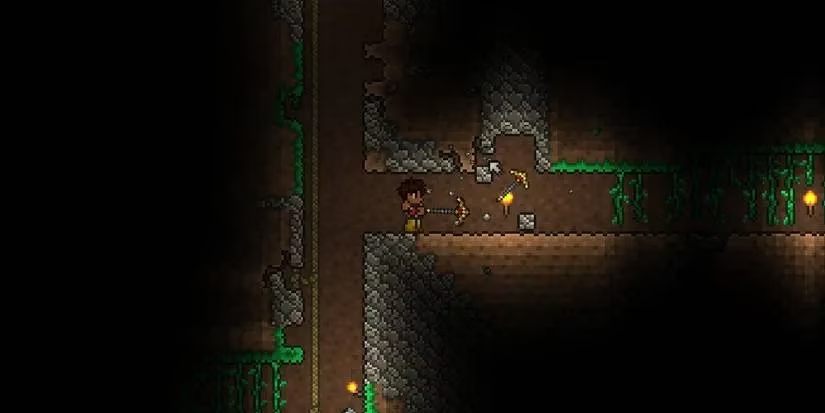
Once you’ve got a furnace glowing and an anvil clanging, aim for gold or platinum equipment.
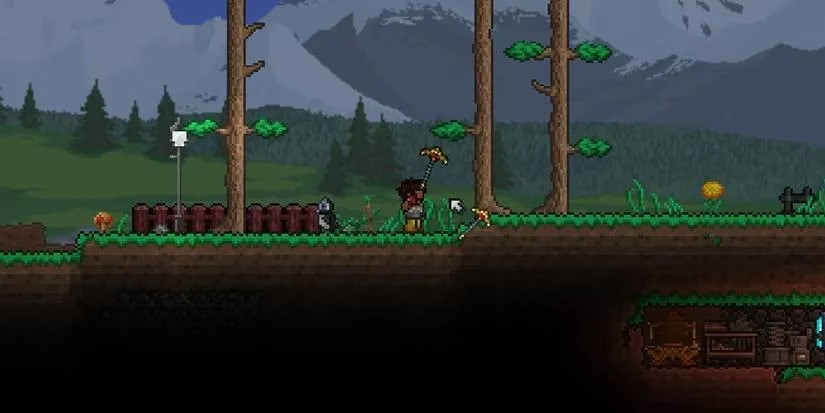
Your world spawns either gold or platinum deposits, and both serve the same purpose: they unlock the highest pickaxe power before you defeat the Wall of Flesh and crack into hardmode. Pickaxe power decides which blocks you can break. With a gold pickaxe you can mine hellstone and dungeon bricks – without it, you’re locked out of late pre-hardmode content. I remember spending two real-world evenings digging for gold to craft a full set of armour, only to realise platinum had spawned in my world and my gold bars were just shiny paperweights. It’s worth checking which metal generation your world has before you invest. Either way, a full set of metal armour plus a pickaxe of the same tier will let you survive the first three bosses without having a heart attack.
Caving is dangerous. Health potions have a 60-second cooldown (30 seconds if you use a Philosopher’s Stone later), and mushrooms barely heal you. So I learned to bring a campfire wherever I go.
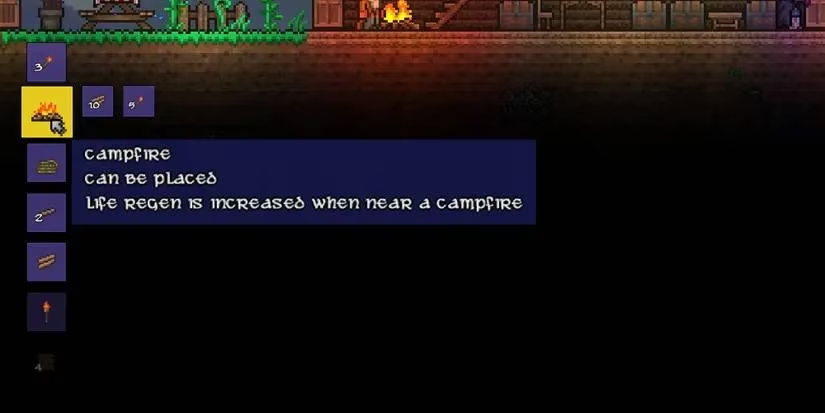
A lit campfire grants a constant regeneration buff as long as you stand near it. If you’re deep in a granite biome and a posse of Hoplites has you at 10 health, box yourself in with dirt, drop a campfire, and sip a potion. Wait for the gentle orange glow to top you off, then continue. It’s simple, but it’s saved my life more times than my trusty grappling hook.
Speaking of early bosses, the King Slime is your training dummy. He’s an optional fight that can happen randomly during a Slime Rain event, or you can summon him by crafting a Slime Crown with gel and a gold/platinum crown at a demon altar. When I faced him with a wooden bow and flaming arrows, the battle taught me about dodging, arena building, and the value of vertical mobility. Plus he drops the Slimy Saddle, a mount that lets you leap high and bounce off enemies.
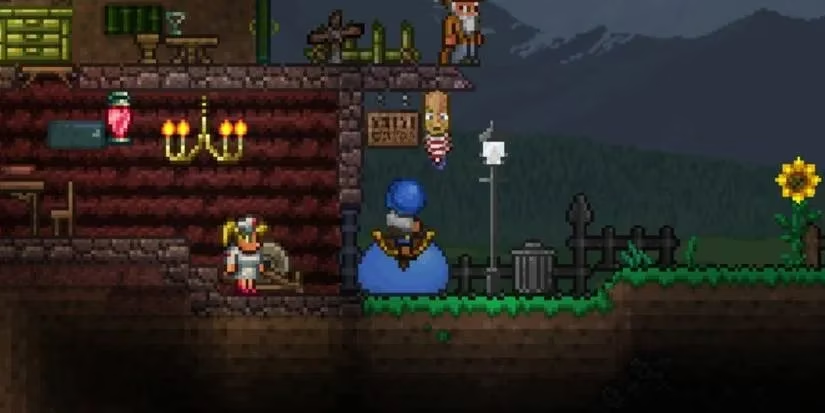
Defeating him also gives you solid gel and a chance at the Slime Hook – a great early grappling hook. Don’t skip this fight; it warms you up for the Eye of Cthulhu and the Eater of Worlds.
NPCs are your silent partners. The Merchant, the Nurse, the Demolitionist – they all need houses. By 2026, the happiness system is well established, but in the first few days, don’t worry about optimal pylon placement. Just build a giant wooden hotel with identical rooms. Each room needs walls, a door, a light source, a chair, and a table.
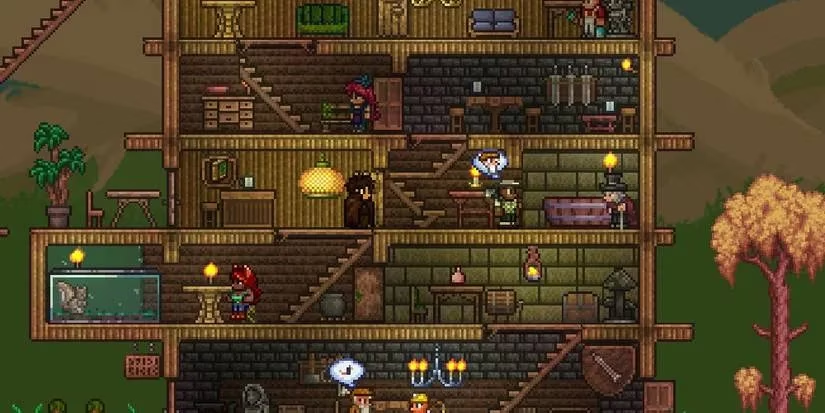
I hammered out a seven-storey tower of shoebox rooms and watched NPCs pour in. They sell everything from piggy banks to healing potions to explosives. Even if they grumble about overcrowding, their shops expand as you progress, giving you access to crucial items without travelling across the map.
Now, explore surface-level biomes.
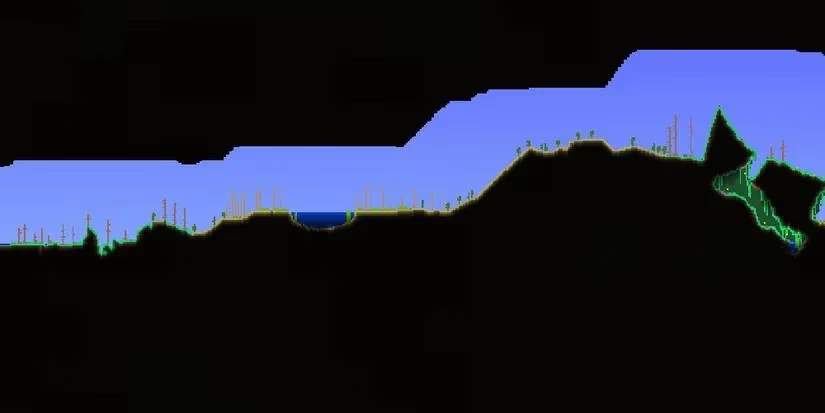
Walk east and west until you find your world’s evil biome – the purple corruption or the pink crimson. Note where the Dungeon stands, usually on one ocean-side edge. The jungle and the snow biome also need to be on your mental map. Knowing these locations lets you gather biome-specific materials (mahogany, shiverthorn, jungle spores) and plan arena spots for later boss fights. The evil biome will spread, so I recommend digging a quick 3-block-wide trench around it early on to preserve your landscape.
Speaking of the jungle, it’s an absolute treasure vault.
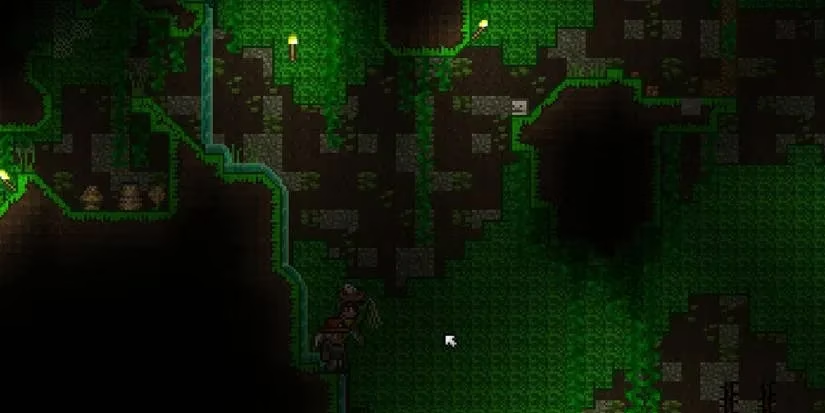
Jungle caves spawn extra gold/platinum ore, stingers from Hornets, and jungle spores. Craft the Amazon yoyo or the Blade of Grass, and you’ll out-damage almost any pre-hardmode weapon. I farmed jungle armour and a Thorn Chakram and suddenly the Dungeon became a breeze. Yes, the jungle is tough – man-eaters dart through walls, bats swarm nonstop – but the rewards are worth the risk. Later, in hardmode, you’ll return here for Chlorophyte, Life Fruits, and Plantera’s bulb, so early familiarity pays off.
Finally, money matters.
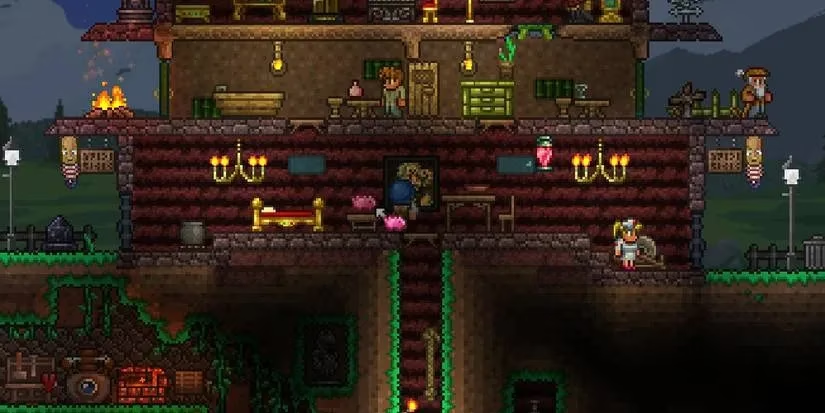
Buy a Piggy Bank from the Merchant the moment he arrives. It acts as your personal safe, accessible from any surface. When you die, you drop coins – but coins stashed in the Piggy Bank stay safe. In multiplayer, other players see only their own money inside it, so it doubles as private storage. I habitually funnel every silver and gold coin into that porcelain pig during cave runs, so even if I die to a trapped Boulder, I can respawn and immediately afford an upgrade.
In summary, my 2026 Terraria starter kit looks like this: spawn shack, chest collection, resource obsession, gold/platinum tools, campfires, King Slime warm-up, NPC hotel, biome map awareness, jungle gear grind, and a trusty Piggy Bank. Follow these steps and you’ll move from terrified newbie to confident boss-slayer faster than you can say “Cthulhu’s coming.”