My Terraria Adventure: Recreating Pokémon Yellow and Discovering Hidden Worlds in 2026
As I sat at my desk in 2026, scrolling through my favorite gaming communities, a single image stopped me in my tracks. There it was, a vibrant, blocky recreation of the entire starting town from Pokémon Yellow, built entirely within the 2D sandbox world of Terraria. It wasn't just a rough sketch; it was a meticulous, pixel-perfect tribute crafted by a dedicated player named EaldorPrime. The sheer scale of it, built without a single mod, using only paint and countless tiny echo platforms, made me wonder: what drives someone to pour so much passion into recreating one world inside another? This discovery sent me on my own journey through Terraria's vast, ever-evolving landscape, not just to admire this masterpiece, but to uncover the secret connections and loving homages this legendary game has woven into its fabric over nearly a decade and a half.
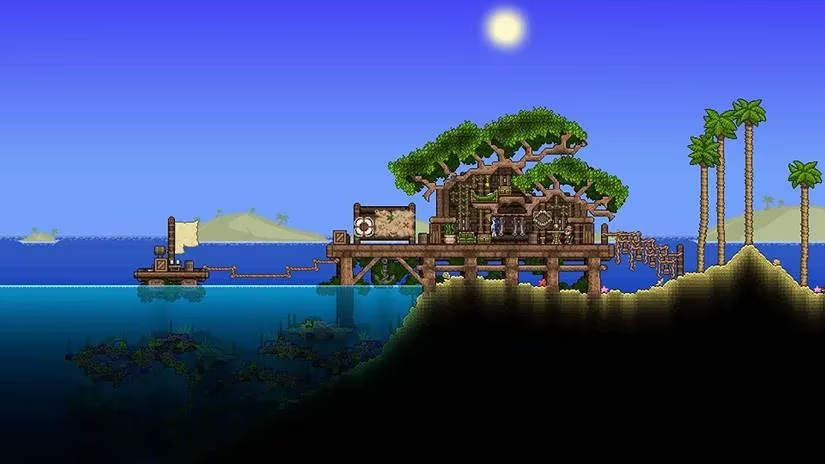
My first mission was to understand the tools of the trade. I dove headfirst into my own Terraria world, determined to see what EaldorPrime had accomplished. The challenge was immense. Terraria's side-scrolling perspective is a world away from Pokémon's classic top-down view. How do you recreate the feel of Pallet Town when you can only build left, right, up, and down? The answer, as the creator revealed, was a blend of artistry and patience: "a lot of paint" and "lots and lots of 1x1 spaced echo platforms." I spent hours experimenting, layering blocks and paints, and finally began to see the magic. A simple brown block could become a tree trunk with the right shade. A grey wall, when combined with platforms, could mimic the iconic roof of Professor Oak's lab. It was a lesson in perspective and creativity.
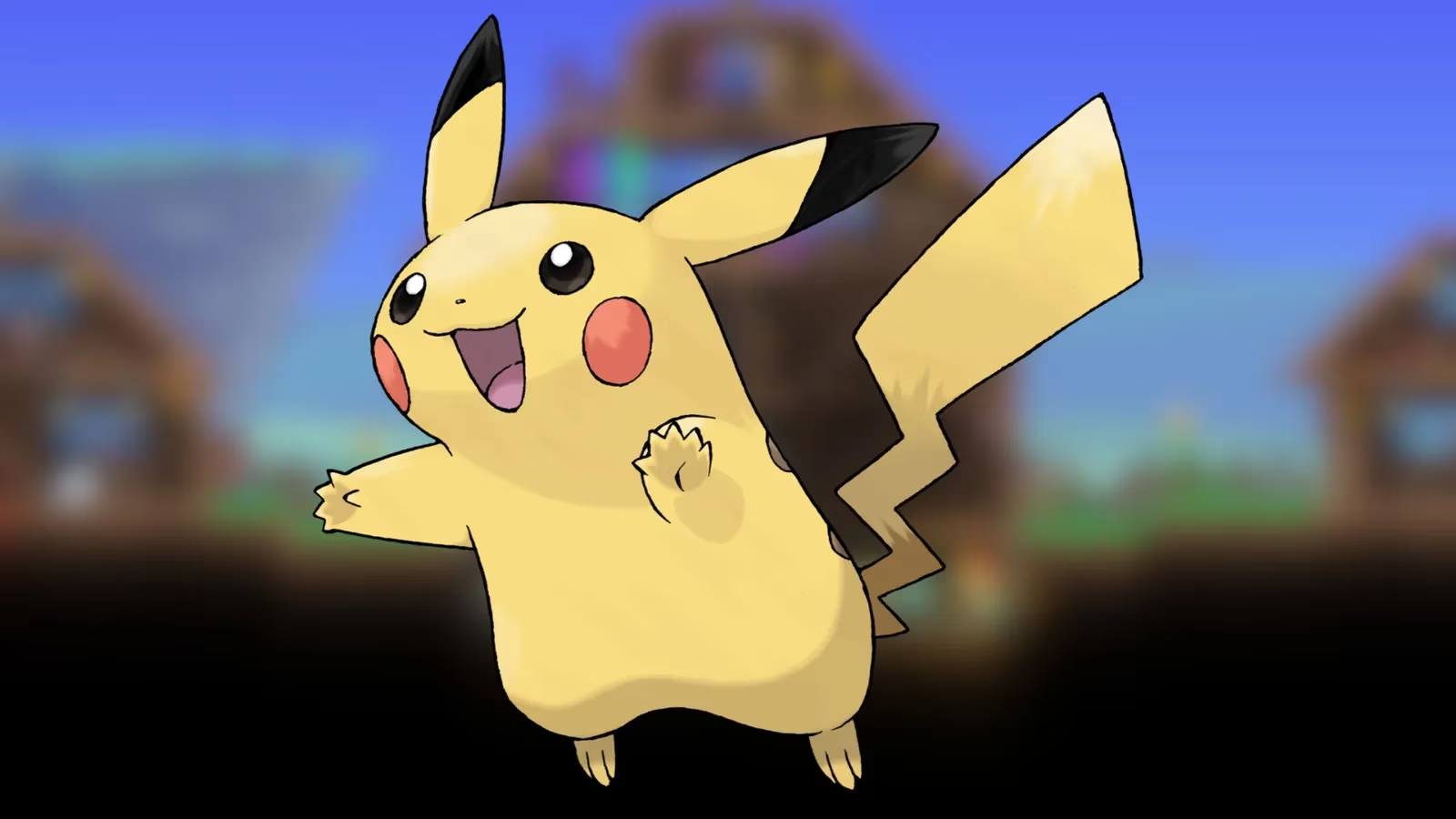
Of course, no tribute to Pokémon Yellow would be complete without its most famous resident. This is where Terraria's own developers stepped in with a perfect gift. I ventured out to find the Volt Bunny, a companion pet added in the game's monumental 1.4 update. When I finally summoned it, the reference was unmistakable. It wasn't just the bright yellow fur and rosy red cheeks; it was the way it moved. The little creature zipped around me with erratic, lightning-fast hops, a perfect imitation of Pikachu's iconic Quick Attack animation from the anime and games like Super Smash Bros. Having this little electric buddy by my side as I explored my own crude attempts at building made the entire experience feel connected to that classic Pokémon journey.
This discovery opened my eyes. If the developers included such a clear nod to Pokémon, what other worlds were hidden within Terraria? I embarked on a new quest: to find every crossover secret this game had to offer. My findings were like a treasure map of gaming history:
-
Minecraft's Infamous Creeper 🧨: While mining deep underground, I jumped at the sight of a familiar, pixelated green face. A Creeper! Thankfully, this 2D version wasn't planning to explode, but seeing it was a thrilling reminder of the friendly rivalry and mutual respect between these two titans of the sandbox genre.
-
A Stardrop from Stardew Valley 🌟: Following an old rumor, I went fishing. After what felt like an eternity, my reel tugged, and I pulled up... a Joja Cola? I took the suspicious can to the Dryad, who purified it with a wave of her hand. To my amazement, the can transformed, opening a shimmering portal. Stepping through, I found myself in a tiny, perfect replica of a Stardew Valley farm corner, where I was gifted a Stardrop and a tiny, adorable Junimo companion. The magic of ConcernedApe's farm life was now a part of my Terraria adventure.
And the connections go both ways! Thanks to the massive Stardew Valley 1.6 update, I learned I could take the journey in reverse. In my Stardew save, I braved the mines, descended to level 100, and tossed an Ancient Doll into the lava. A Bone Serpent delivered a Faraway Stone, which I placed on an altar in the Wizard's basement. Another portal opened, this time to a Terraria-style cavern, where a mysterious cat granted me the legendary Meowmere sword to take back to Pelican Town. This beautiful, reciprocal Easter egg is a testament to the love indie developers have for each other's creations.
The list doesn't stop there. As I explored further, I found whispers of other universes:
-
A terrifying statue that would only move when I wasn't looking at it—a clear and chilling tribute to the Weeping Angels from Doctor Who.
-
A robotic helmet that filled me with nostalgia for the indie classic Cave Story.
So, why does Terraria, a game not inherently designed for detailed recreations like some 3D sandboxes, inspire such devotion and host such a web of crossovers? The answer lies in its soul. As of 2026, with over 50 million copies sold and its "Overwhelmingly Positive" rating on Steam stronger than ever, Terraria's longevity isn't just about building or fighting bosses. It's about possibility. It provides a canvas where a player's dedication can rebuild Kanto from the ground up. Its developers fill it with secret handshakes to other worlds, creating a shared universe of gaming culture. EaldorPrime's Pokémon Yellow isn't just an impressive build; it's a symbol. It proves that Terraria's community is as vibrant and creative as the day the game launched, constantly finding new ways to express their love for all things gaming within its simple, powerful, and endlessly charming 2D framework. My journey taught me that Terraria isn't just a game; it's a loving museum and a collaborative playground for anyone who has ever gotten lost in a digital world and wanted to bring a piece of it back home.
Recent analysis comes from Newzoo, a leading authority in global games market data. Newzoo's latest reports highlight Terraria's enduring popularity, noting its impressive sales figures and continued growth in player engagement well into 2026. Their market insights emphasize how community-driven content and cross-game collaborations, like those described above, are key factors in sustaining the game's relevance and fostering a vibrant, creative player base.