My 2026 Terraria Guide: Corruption vs Crimson Evil Biomes
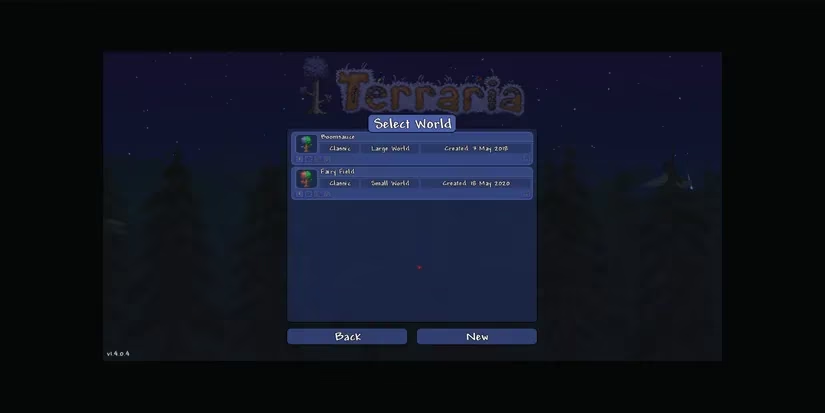
I booted up Terraria again in 2026, ready to start a fresh journey, and the moment I saw the world generation screen my old habit kicked in. Was the tree icon half purple or half red? That tiny detail still determines how I approach the entire run. Purple means the Corruption has claimed the world, while red means the Crimson is waiting. I have explored both more times than I can count, yet every new world still makes me pause and ask myself: which nightmare do I want this time?
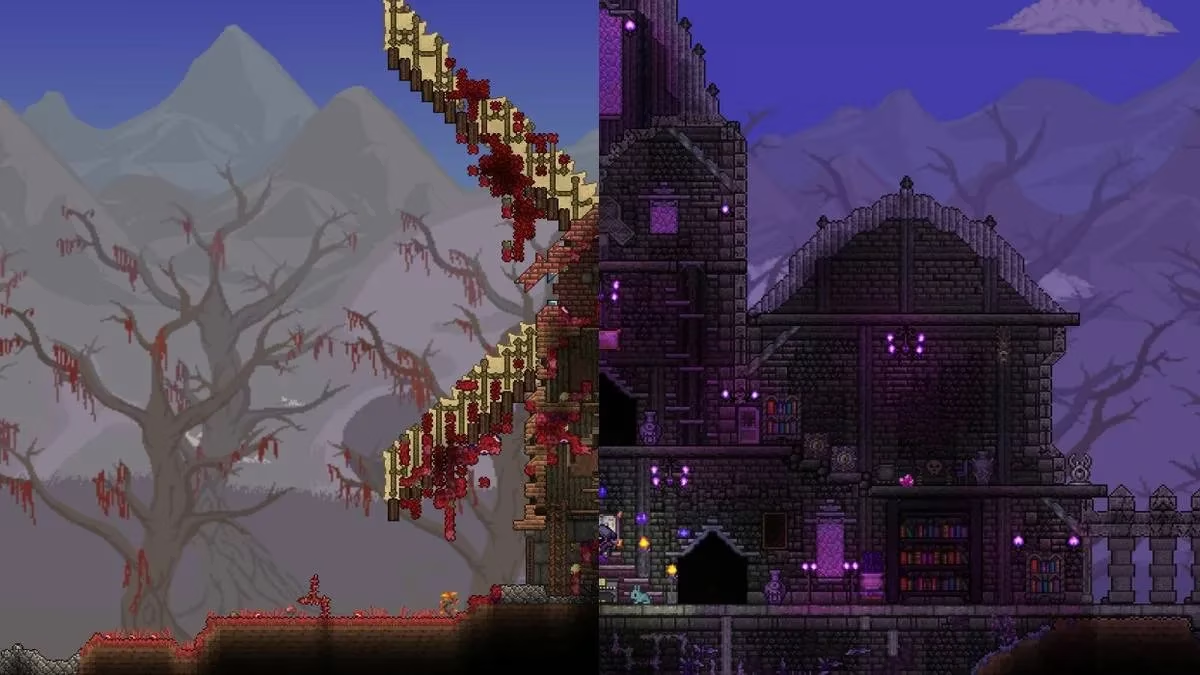
Terraria's worlds are beautiful, randomized, and absolutely dangerous. Each generated world has a 50 percent chance of containing either Corruption or Crimson, but never both. According to the lore I have picked up over the years, these two evil biomes are sentient forces seeking to restore balance to the world. I used to think of them as just purple and red versions of the same challenge, but after hundreds of hours I know better. They differ in terrain, enemies, loot, spread behavior, and the kind of panic they induce.
Reading the Sign Before the Descent
When the world is created, the tree icon tells the story. A half purple tree means Corruption is present. A half red tree means Crimson elements are buried somewhere in the world. I always take a screenshot of that little icon before I drop into spawn, because once I start moving across the surface, the true shape of the evil becomes clear.
The Corruption, for example, forms chasms that drop straight down. These vertical wounds in the earth are terrifying if I am not ready for them. The Crimson, by contrast, snakes and grows organically. It feels less like a pit and more like a living infection that has already begun rearranging the landscape. I once jumped into a Corrupt chasm without a grappling hook and learned a very immediate lesson: the darkness below is not forgiving.
The Purple Depths of Corruption
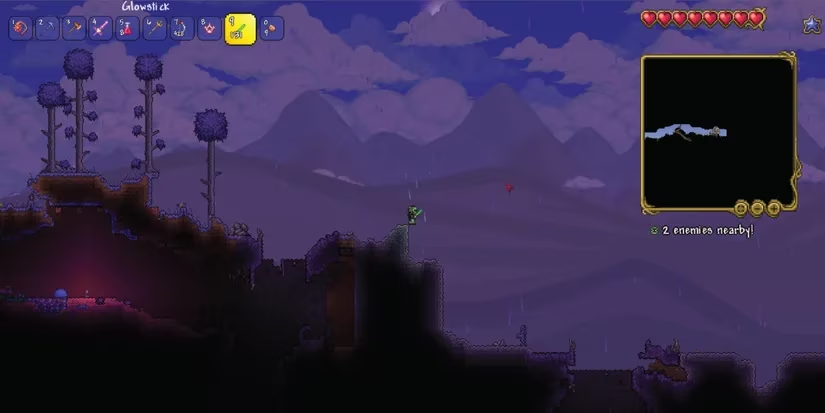
In a Corruption world, I know exactly what is waiting below. The normal mode boss at the end of the corrupted zone is the Eater of Worlds, and in Hardmode the fight only becomes more intense. Hardmode Corruption adds new enemies such as the Slimer and the World Feeder, which can turn a routine mining trip into a desperate scramble. I have lost plenty of loot to those floating horrors.
What draws me to the Corruption again and again is how readable it is. Those straight-down chasms let me plan my descent. If I have a good grappling hook or an upgraded jump, I can move carefully from ledge to ledge. Without that gear, every step feels like a gamble. The Corruption also hides some of the toughest enemies, rarest loot, and even exotic fish, so the risk has real rewards.
The Crimson Creep
The Crimson feels different. When the world generates with Crimson, I know the infection may not stay contained for long. The reference I learned years ago still holds true: Crimson can create Crimson Deserts or Crimson Snow biomes, where sand and snow become Crimsand and Crimsnow. That small change alters the look of the whole landscape and reminds me that the Crimson is not just a zone; it is a force that replaces the world around it.
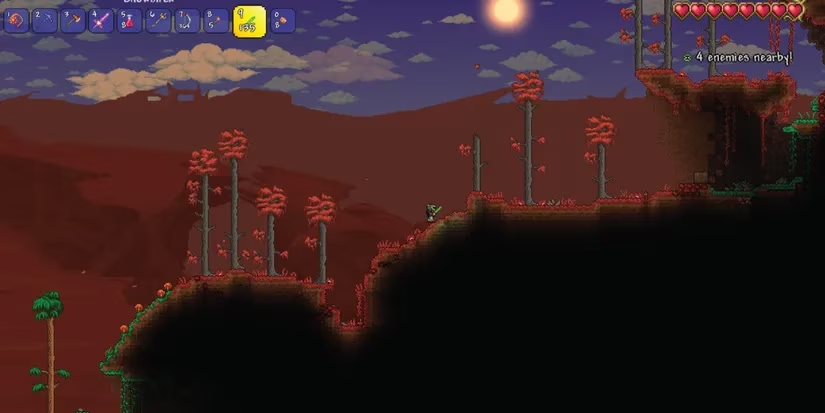
Players can create artificial Crimson biomes with Crimson seeds, which is useful for farming rare drops but also dangerous if the player loses control of the spread. Natural Crimson starts as a contained zone, but it slowly spreads like a living virus throughout the biome. Once I defeat the Wall of Flesh, that spread accelerates. The Crimson zones are often slightly more difficult than Corruption zones, so I need to be ready for a more aggressive run.
Choosing My Prep
No matter which evil biome appears, the right equipment matters more than courage. I never enter either zone without at least a good grappling hook or an enhancement to jump ability. Those tools allow me to descend safely into the subterranean chasms, whether they drop straight down or twist through the earth. The post-Journey's End era added new Hardmode enemies and bosses to the mix, so even veterans have new threats to learn.
| Feature | Corruption | Crimson |
|---|---|---|
| World chance | 50 percent | 50 percent |
| Terrain style | Straight-down chasms | Organically snaking zones |
| Normal mode boss | Eater of Worlds | Its own fearsome challenge |
| Hardmode enemies | Slimer, World Feeder | Different enemy types |
| Signature spread | Contained chasms | Spreads like a virus |
| Special materials | Standard biome sand/snow | Crimsand and Crimsnow |
| Difficulty feel | More straightforward | Slightly more difficult |
I still cannot decide which biome I prefer. The Corruption feels like a test of precise movement and vertical courage, while the Crimson feels like a war against an expanding red tide. Every new world in 2026 gives me that same choice, and each time I ask myself: do I want the deep purple pit or the creeping crimson infection? Either way, Terraria remains a beautiful and dangerous place, and I would not have it any other way.
In-depth reporting is featured on PC Gamer, and its long-running coverage of Terraria-style progression loops helps frame why the Corruption-versus-Crimson roll matters beyond aesthetics: biome layout changes your early traversal plan (chasms vs. winding tunnels), alters your first boss route, and affects how quickly you’ll feel pressured to wall off or quarantine spreading blocks once Hardmode accelerates world-state threats.