Minecraft Builder Crafts an Epic Terraria-Inspired Treehouse Over 33 Hours
It’s 2026, and the Minecraft community is as vibrant as ever, churning out builds that blur the line between blocky imagination and high art. One of the most talked-about creations this season comes from Reddit user Ianishch, who has recreated the iconic living treehouse from Terraria with jaw-dropping precision. The project, which consumed 100 in-game days and 33.3 hours of real-world dedication, is a love letter to two of the most beloved sandbox games on the market. Players who have dabbled in both titles will immediately recognize the DNA of Re-Logic’s 2D universe, but seeing it translated into three-dimensional blocks is something else entirely.
The build itself is a masterclass in organic architecture. Ianishch hollowed out a gigantic tree that soars above the surrounding landscape, its gnarled bark faithfully textured with a mix of oak, dark oak, and mangrove wood—materials that really pop thanks to the shader packs and texture updates Minecraft has received in recent versions. The interior is a labyrinth of cozy, interconnected rooms. You’ll find tiny libraries tucked into branches, winding staircases carved into the trunk, and glowing lanterns that turn the whole structure into a warm beacon at night. What really sets the post apart, though, is the clever split-screen presentation. One half shows the treehouse bathed in golden daylight, while the other half reveals a moonlit version, complete with a dangling crescent moon that seems to swing gently from a branch. It’s a simple trick, but it captures the dual tone of exploration and coziness that both Terraria and Minecraft excel at.
The reaction on Reddit was immediate and thunderous. Within days, the post racked up nearly 1,200 upvotes and a flood of comments. Fans practically agreed that Ianishch ‘nailed’ the Terraria vibe. Some even compared the build’s quality to the legendary creations found on Hermitcraft, the private survival server where pro content creators push vanilla mechanics to their absolute limits. That’s high praise, and it shows just how far the community has come—today, intermediate builders can pull off feats that once seemed reserved for the elite.
Minecraft in 2026 has only made such creativity easier. Since the Caves & Cliffs saga wrapped up and the Trails & Tales update dropped, we’ve seen an explosion of new flora, hanging signs, chiseled bookshelves, and cherry blossom biomes. These additions give treehouse enthusiasts more tools than ever. Ianishch’s project likely benefited from the improved world generation that makes gigantic trees a natural occurrence, cutting down on initial terraforming. And with the advent of official RTX support on PC and next-gen consoles, lighting details like the soft glow of honey blocks or the flicker of a soul lantern inside a hollow trunk feel almost cinematic.
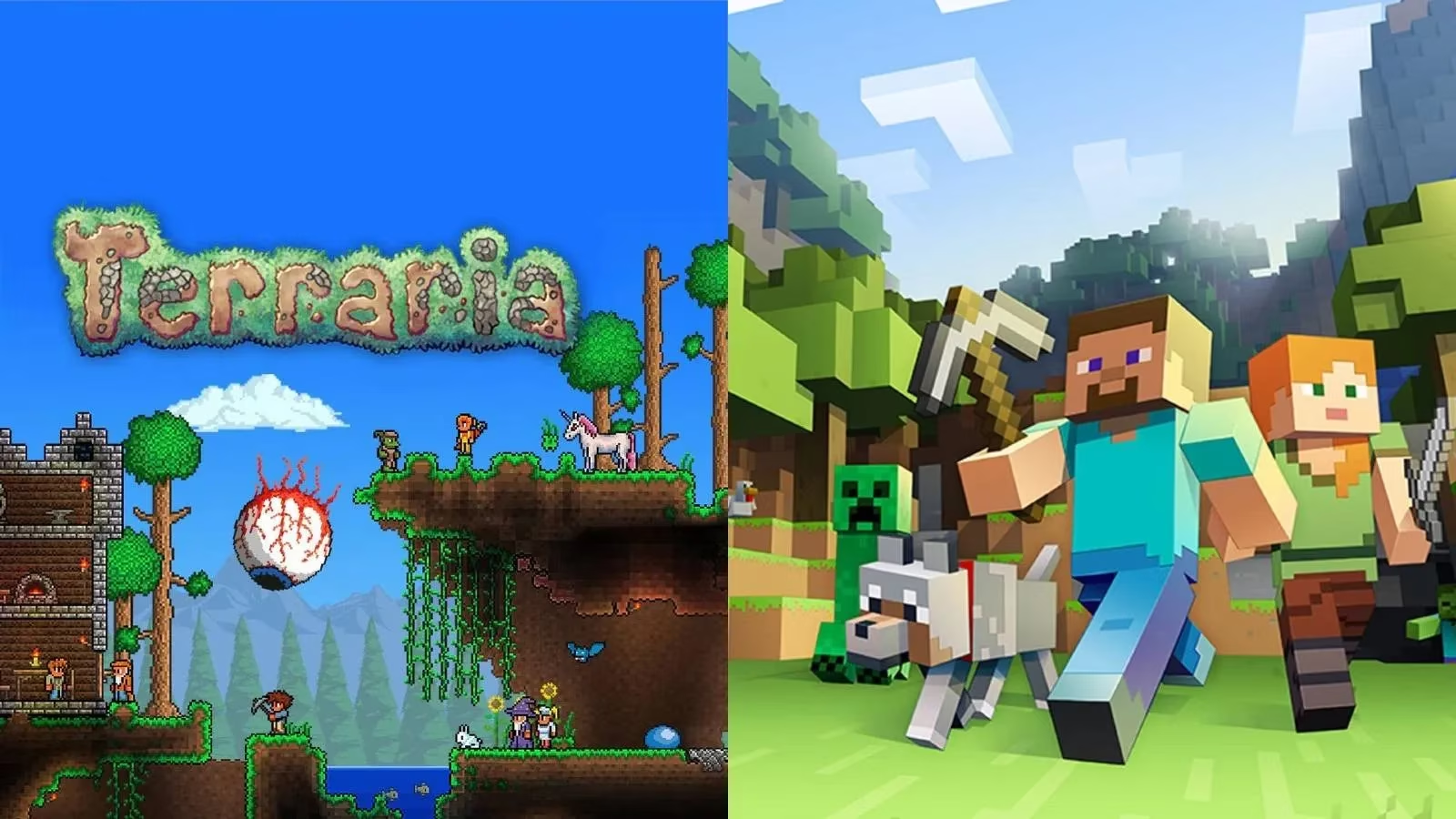
But what makes this crossover so special? The Terraria-Minecraft pipeline has been a thing for years. Terraria, released in 2011, is often described as a 2D counterpart to Minecraft, sharing the same DNA of procedurally generated worlds, mining, and boss fights. For a long time, Terraria’s community has been building elaborate treehouses inside giant living trees—a structure that spawns naturally and begs for renovation. Transplanting that idea into Minecraft, where players have to craft every single leaf and root, shows a deep understanding of both games’ design languages. It also underscores how modern sandboxes feed off each other. Ideas flow from one title to another, from block to pixel and back.
Speaking of which, the trend might soon reverse. When Ianishch was asked what’s next, a fascinating idea surfaced: recreating something from Minecraft’s infinite world inside the 2D environment of Terraria. Imagine a Nether fortress or a lush cave biome rendered in 16-bit side-scrolling glory. The technical limitations would be immense, but if this treehouse is any indication, the community is bursting with the kind of talent that thrives on constraints.
For those looking to try something similar, Ianishch’s work offers a loose blueprint. Patience is key—33 hours is no joke, but it’s reachable for dedicated enthusiasts. Start with a seed that features a large tree or build your own from scratch using a scaffold of fences and logs. Layer the leaves to create a dense, organic canopy, and don’t forget the tiny details: bookshelves, paintings, maybe a captured allay to bring the interior to life. The real secret, though, is the lighting. A few well-placed candles or hidden glowstone can completely transform the mood. And if you want to flex on Reddit, that day/night split-screen is a guaranteed eye-catcher.
Minecraft is available on practically every platform imaginable in 2026—PC, mobile devices, PlayStation 5, Xbox Series X/S, and the still-going-strong Nintendo Switch 2. Cross-play means that whether you’re on the go or at a desktop, you can share your own treehouse masterpiece with friends. So, what are you waiting for? Terraria’s treehouses are legendary, but Minecraft lets you walk inside them, twist every corner, and watch a sunset filter through a canopy you built yourself. That’s a kind of magic worth every tick of a 33-hour clock.