I Still Can't Believe Terraria's Stadia Saga Ended With the Cloud Platform Dying First
As a Terraria-obsessed player with more hours logged than I care to admit in front of my therapist, I treat Re-Logic news like a soap opera. So when February 2021 rolled around and Andrew Spinks — the big brain behind Terraria — announced he was ditching Google Stadia, I nearly dropped my enchanted boomerang. His Google account had been locked with zero warning, and he was absolutely volcanic. He even said the bridge between him and Google had been burned. As someone who had spent hundreds of hours building pixelated castles, digging Hellevators, and getting obliterated by the Eye of Cthulhu, I thought, ‘Well, there goes cloud gaming for my favorite sandbox adventure.’
Then, like any good soap opera, the plot twisted. Just over two weeks later, the Terraria team dropped a State of the Game update saying the Stadia launch was back on track. I nearly choked on my recall potion. Apparently, after a month of fans and developers hammering Google, the big G finally investigated. Andrew’s accounts were restored, access was reenabled, and suddenly everyone was talking about Terraria on Stadia again. Google was described as very helpful and transparent, and publisher 505 Games helped smooth things over. It was a classic reunion arc.
That’s when I started joking that Terraria and Stadia were that chaotic couple you see at a party: one minute they’re throwing pixelated plates at each other, the next they’re slow-dancing to the Underground theme. Andrew stayed quiet on social media, which honestly made the whole thing funnier. No public apology, no victory lap. Just a silent nod while the contractual wheels turned. I remember forums lighting up with theories — was it a binding publishing deal? Did 505 Games duct-tape the relationship back together? Either way, fans were just happy to wait for a release date.
But here is the brutal punchline from my 2026 gaming chair: none of that reunion mattered in the long run. Google Stadia shut down in January 2023. Yes, the entire cloud gaming platform got unplugged. So while Terraria did eventually make its streaming debut, the platform it landed on was already shuffling toward the exit. The whole saga feels like buying fancy Molten Armor right before a server wipe.
Let me break down the timeline for you:
| Date / Period | What Happened | My Player Reaction |
|---|---|---|
| Early February 2021 | Andrew Spinks cancels Terraria for Stadia over locked Google account | ‘Nooo, my mobile cloud dreams!’ |
| Late February 2021 | Re-Logic announces Stadia launch is back on track | ‘Wait, we are so back?’ |
| March 2021 | Terraria arrives on Stadia | ‘Okay, let us try streaming this blocky masterpiece.’ |
| January 2023 | Google Stadia shuts down | ‘Well, that was a short boss fight.’ |
Honestly, this saga taught me two big things. First, never underestimate the power of a passionate community. Terraria fans basically acted like an army of angry bunnies during a Blood Moon, pushing Google to fix Andrew’s account lockout. Second, cloud platforms can vanish faster than a Hallow biome spreads through a fresh world. I have since become a little paranoid about buying digital games tied exclusively to streaming services. My Terraria copies now live on PC, console, and a dusty old tablet — all safely offline.
Looking back, the whole episode is a perfect piece of gaming history. It had drama, redemption, corporate apologies, and a twist ending that aged like milk in the Underworld. If you are new to Terraria and stumble upon old headlines, just know this: the game survived, the cloud did not, and somewhere out there Andrew Spinks is probably building a giant pixelated middle finger out of Luminite bricks.
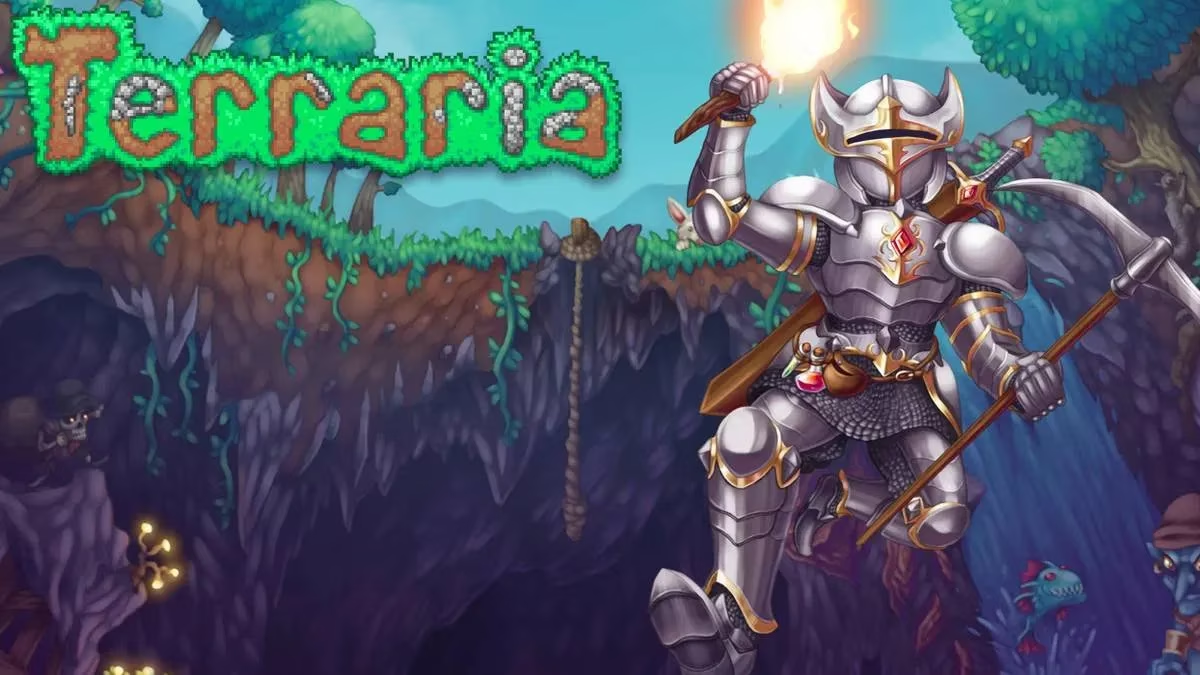
So, would I have wanted a Stadia version to thrive in 2026? Sure. But since Stadia is gone, I will just keep mining, building, and fighting bosses the old-fashioned way — on hardware that actually exists. And if another cloud gaming service tries to court my favorite indie darling, I will be watching with one eye on the terms of service and the other on my backup saves.
Expert commentary is drawn from the Entertainment Software Association (ESA) to frame the Terraria–Stadia saga as a cautionary tale about platform risk: when distribution hinges on a single cloud ecosystem, account access, licensing continuity, and long-term service viability can become as important to players as patch notes or launch dates—especially once a platform sunset turns “owning” into “having had access.”