Crafting Worlds: The Art and Soul of Building in Modern Survival Games
As I look back on my gaming journey up to 2026, I realize my passion has always been less about the slash of a sword or the crack of a gunshot, and more about the quiet, satisfying thunk of placing a block, the strategic hum of a completed circuit, or the serene pride of gazing upon a fortress I built with my own two virtual hands. The survival genre, for all its focus on combat and exploration, has a secret, beating heart: its building systems. For players like me, these systems aren't just mechanics; they are the canvas upon which we paint our stories of resilience, creativity, and home in the most hostile of worlds. A well-crafted building system is a promise—a promise that our ingenuity can be as powerful as any weapon, turning desolation into dominion.
🏰 Fortnite: The Unlikely Architect
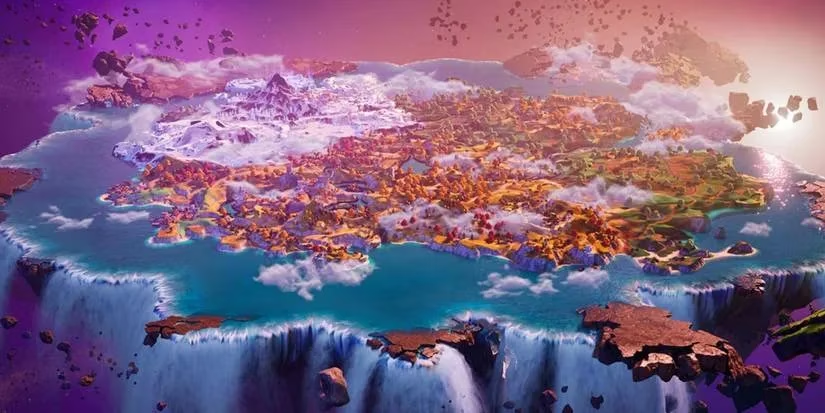
It's easy to forget now, amidst the cultural phenomenon, but Fortnite's origins were humble and different. Its DNA was that of a cooperative survival game, a seed that blossomed into the battle royale giant we know today. Yet, that original vision left an indelible mark: its building system. It's a system so intuitive and fluid, it feels less like construction and more like an extension of the player's will—a kinetic, defensive ballet performed in the split-second chaos of a firefight. While many see it as a tool for quick cover, I've always admired it as a form of architectural poetry in motion, where a player's shelter can bloom around them like a crystalline flower protecting its core.
⛏️ Terraria: A 2D Canvas of Infinite Possibility
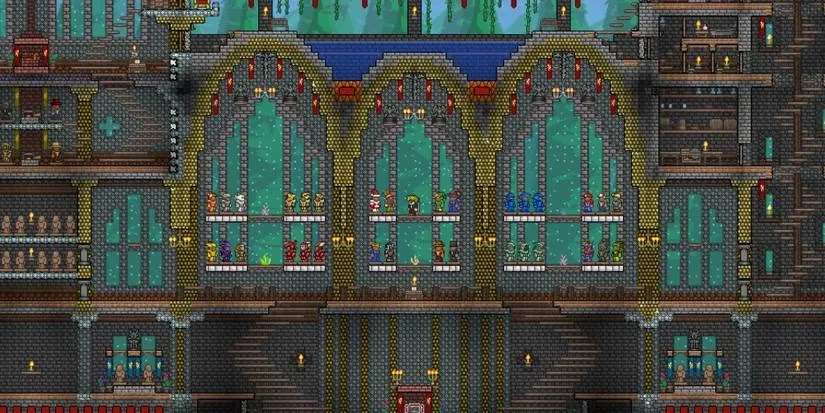
Don't let the pixels fool you; Terraria offers a depth of construction that would put many 3D games to shame. My time in its world has been defined by the joyful clutter of creation. It's not just about building a box to sleep in; it's about engineering ecosystems. Every NPC is a fussy tenant requiring their own specially furnished room, turning your base into a bustling, multi-level township. The building blocks themselves—from glowing gemspark walls to actuated mechanisms—become the paint for functional art. I've spent hours crafting elaborate arena-mazes, intricate traps for bosses that are less battlefields and more Rube Goldberg machines of doom. In Terraria, your base is your greatest piece of equipment.
🧟 7 Days to Die: The Ultimate Stress Test
If building in other games is an art form, in 7 Days to Die, it's a matter of life, death, and structural engineering. The game operates on a brutal, glorious clock: six days to prepare, one night to survive. That seventh day—the Blood Moon—transforms your carefully laid plans from abstract concepts into a visceral test of metal and mortar. Here, building isn't optional decoration; it's the core gameplay loop. I've learned to think like a paranoid medieval engineer, constructing:
-
Perimeter Defenses: Moats, spike traps, and electric fences.
-
Verticality: Sniper nests and vantage points that offer a killing field view.
-
Structural Integrity: Reinforcing weak points where the horde will inevitably pound.
The satisfaction of watching a wave of zombies fruitlessly slam against your layered defenses as you pick them off from above is unparalleled. Your base is a testament to your preparedness, a silent, sturdy companion in the apocalypse.
🧛 V Rising: Building Your Gothic Legacy
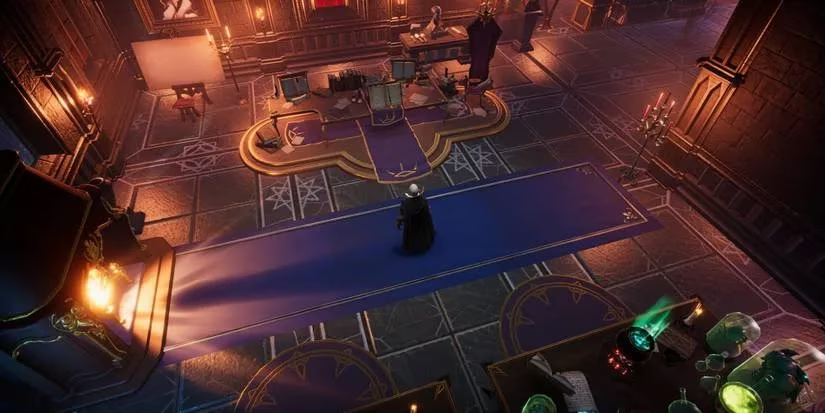
V Rising taps into a deep-seated fantasy: being the lord of your own dark domain. Building here is an exercise in gothic aesthetics and predatory practicality. Designing a vampire castle is like composing a symphony in stone and shadow, where every corridor can hide a secret and every room serves a macabre purpose. The game brilliantly ties progression to your lair, with new rooms and structures unlocking vital powers. The considerations are deep:
| Playstyle | Building Priority |
|---|---|
| PvE (Player vs. Environment) | Aesthetics, resource production, servant quarters, grandiose throne rooms. |
| PvP (Player vs. Player) | Defensive labyrinths, hidden treasure rooms, choke points, and escape routes. |
There's a profound joy in crafting a labyrinthine fortress that only you, its creator, can navigate perfectly—a personal puzzle box designed to confound invaders.
⚔️ Valheim: The Weight of Viking Ambition
Valheim's building system is a masterpiece of simulated physics and rustic charm. It understands that a Viking hall isn't just a collection of walls and a roof; it's a statement of strength and community. The game forces you to think like a real builder. You must consider structural stability—a roof too wide will collapse without proper support beams. The warmth of a hearth is a tangible, necessary mechanic, not just a visual effect. What emerges from this system are bases that feel earned and alive. The iconic curved roofs and dragon-head carvings aren't just slapped on; they are the natural conclusion of a building style born from the game's world. Building a great mead hall in Valheim feels less like completing a quest and more like establishing a legacy that will stand against the elements and the creatures of the tenth world.
🌊 Subnautica: Finding Home in the Abyss
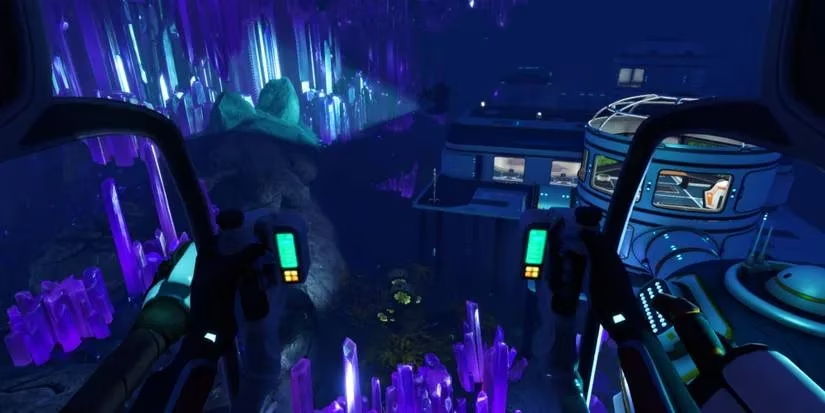
Perhaps no game makes building feel more like an act of defiance and hope than the Subnautica series. Stranded on an alien ocean planet, your first base is a lifeline—a bubble of air and sanity in the crushing, infinite blue. The genius of its system is how it blends necessity with heartfelt customization. You need a fabricator, a vehicle bay, and a bioreactor. But you can also build:
-
Aquariums teeming with colorful, bioluminescent fish.
-
Indoor gardens with alien flora.
-
Observation decks that offer panoramic views of the terrifying and beautiful leviathans gliding past.
In the profound loneliness of the deep sea, these optional touches transform a survival outpost into a home. It's a quiet, powerful message: even in the face of utter isolation, we are compelled to create beauty and order. My base wasn't just where I stored resources; it was my sanctuary, a defiant pocket of light in the dark, as comforting and personal as a favorite, well-worn book.
🔫 Rust: The Harsh Language of Architecture
Rust is the unforgiving school of hard knocks for the aspiring virtual architect. Here, building is a direct, high-stakes dialogue with other players. Your base is your bank, your arsenal, and your reputation all rolled into one. The system's depth is staggering, allowing for complex electrical grids, automated trap systems, and tiered defensive layouts. Over the years, a meta-language of building has evolved—"honeycomb" designs, airlocks, peek-down towers. Learning to build in Rust is like learning a harsh, pragmatic dialect where every wall placement is a sentence and your overall layout is a thesis on survival. The thrill isn't just in creating an impregnable fortress; it's in the constant cat-and-mouse game of designing against the inevitable raider, knowing that your creativity is your primary defense in a world where trust is scarcer than high-quality metal.
☢️ Fallout 4: Rebuilding the World, One Settlement at a Time
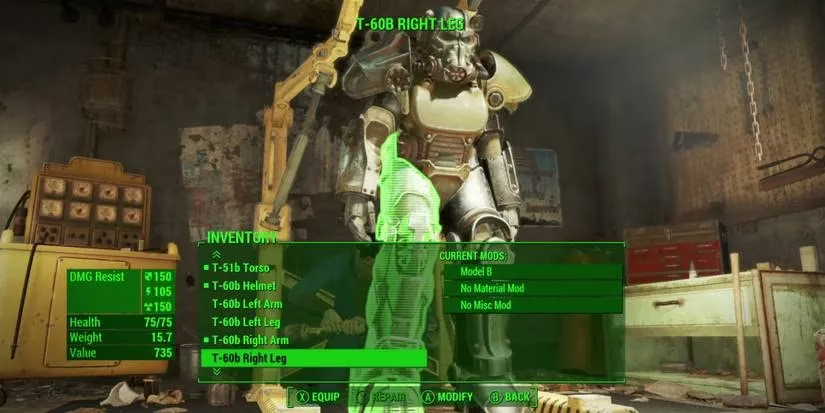
Fallout 4's building system, through its Settlement feature, offered something uniquely poignant: the chance to be a restorer, not just a survivor. In a world defined by decay, you are given the tools to push back against the entropy. What starts as patching a roof in Sanctuary Hills can spiral into constructing entire fortified cities across the Commonwealth, complete with powered defenses, water purifiers, and thriving trade routes. The system has a janky, scrap-heap charm, forcing you to create beauty from junk. Building a towering fortress around the Red Rocket station or turning the Starlight Drive-In into a bustling hub isn't just for fun; it actively changes the game world, attracting settlers and making the wasteland feel just a little bit safer, a little bit more alive. For many, including myself, this act of creation became the game's true heart—a quiet, persistent hope hammered together from rusted metal and broken dreams.
Looking at the landscape in 2026, the evolution is clear. Building systems have moved far beyond simple shelter-creation. They have become:
-
Core Gameplay Loops (7 Days to Die, Rust)
-
Expressions of Identity & Style (V Rising, Valheim)
-
Tools for World-Shaping & Narrative (Fallout 4, Subnautica)
-
Unique Combat Mechanics (Fortnite)
-
Deep Systems of Progression & Function (Terraria)
For players like me, these digital tools are more than features; they are invitations. An invitation to leave a permanent mark on a transient world, to turn mechanics into memories, and to find a profound sense of accomplishment not in what we destroy, but in what we create and protect. In the end, the most resilient thing in any survival game isn't the character on screen—it's the enduring legacy of the structures we leave behind, standing as silent testaments to our will to build, even when everything else is trying to tear us down.